



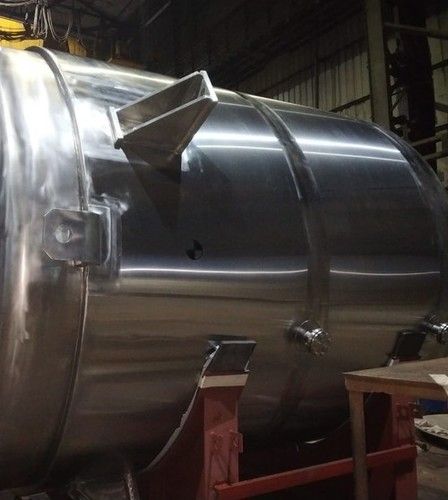
Storage Tank Insulation
1200 INR/Piece
Product Details:
- Product Type foam insulation, pipe insulation, tank insulation and storage tank insulation
- Material polyethylene foam, pu foam , thermocol
- Thickness 50-500 Millimeter (mm)
- Application used in petro chemical , oil and gas industries and also in pharma and chemical industries.. Mainly used to maintain the temperature in tanks and pipes
- Color Standard foaming colour
- Click to View more
X
Storage Tank Insulation Price And Quantity
- 1200 INR/Piece
- 1 Piece
Storage Tank Insulation Product Specifications
- polyethylene foam, pu foam , thermocol
- Standard foaming colour
- 50-500 Millimeter (mm)
- foam insulation, pipe insulation, tank insulation and storage tank insulation
- used in petro chemical , oil and gas industries and also in pharma and chemical industries.. Mainly used to maintain the temperature in tanks and pipes
Storage Tank Insulation Trade Information
- mundra
- Western Union, Cash Advance (CA)
- 5 Piece Per Month
- 30 Days
- Contact us for information regarding our sample policy
- Standard PAcking
- Asia, Australia, Middle East, Central America, Africa, Western Europe, North America, South America, Eastern Europe
- Kerala, Mizoram, East India, Meghalaya, Manipur, West India, All India, Lakshadweep, Gujarat, Karnataka, Andaman and Nicobar Islands, Chhattisgarh, South India, Central India, North India, Andhra Pradesh, Goa, Odisha, Punjab, Bihar, Chandigarh, Daman and Diu, Jharkhand, Delhi, Haryana, Assam, Dadra and Nagar Haveli, Arunachal Pradesh, Himachal Pradesh, Jammu and Kashmir, Telangana, Tripura, Nagaland, Pondicherry, Madhya Pradesh, Maharashtra, Tamil Nadu, Rajasthan, Sikkim, Uttarakhand, Uttar Pradesh, West Bengal
- ISO 9001 : 2015 and MSME Certified Company
Product Description
Storage tank insulation, available in various product types such as foam insulation and pipe insulation, utilizes materials like polyethylene foam, PU foam, and thermocol. Ranging from 50 to 500 millimeters in thickness, this insulation is vital in petrochemical, oil and gas, pharmaceutical, and chemical industries. It serves to maintain temperature in tanks and pipes, ensuring optimal conditions for stored substances. The standard foaming color provides a professional finish. With applications spanning multiple sectors, storage tank insulation offers energy efficiency, reduced environmental impact, and enhanced operational performance, making it an indispensable component in maintaining temperature-sensitive processes and materials.
Premium Materials for Superior Thermal Control
We use polyethylene foam, PU foam, and thermocol for insulation, offering a range of thicknesses from 50 mm to 500 mm. These materials provide reliable thermal control, making them ideal for demanding climates and sensitive industrial processes. Their inherent durability and insulation properties help protect valuable equipment and reduce operational costs.
Engineered for Diverse Industrial Applications
Our insulation systems are meticulously designed to cater to the needs of petrochemical, oil and gas, pharmaceutical, and chemical industries. They are especially suitable for maintaining the required temperature in storage tanks and pipelines, ensuring consistent product quality and safeguarding against energy inefficiencies.
Comprehensive Solutions from Fabrication to Service
As a leading fabricator, manufacturer, service provider, and supplier based in India, we offer complete end-to-end solutions. From expert consultation and customization to professional installation and after-sales service, we ensure that each client receives optimal performance and support for their specific insulation needs.
FAQ's of Storage Tank Insulation:
Q: How is storage tank insulation installed in industrial facilities?
A: Storage tank insulation is applied either externally or internally by trained professionals. Fabricated panels or sheets of polyethylene foam, PU foam, or thermocol are precisely cut to fit the tank geometry, then secured using industrial adhesives, fasteners, or cladding as needed. This process ensures thermal efficiency and system durability.Q: What benefits does polyethylene foam, PU foam, or thermocol insulation offer for industrial tanks and pipes?
A: These materials provide exceptional thermal insulation, minimize temperature fluctuations, and help prevent energy loss. Their closed-cell structure resists moisture and chemical exposure, making them reliable for demanding petrochemical, oil, gas, pharma, and chemical industries. This results in improved energy efficiency and lower maintenance costs.Q: When should I consider installing or upgrading tank insulation?
A: Tank insulation should be considered when maintaining specific temperatures for stored or transported materials is crucial-especially in locations with extreme weather variations or when energy consumption needs reduction. Upgrades are also recommended when older insulation shows signs of wear or cannot meet present-day performance standards.Q: Where are your insulation products and services available in India?
A: We offer fabrication, manufacturing, supply, and installation services throughout India. Our vast network allows us to serve industrial clients across all major regions, ensuring timely delivery and expert support regardless of location.Q: What is the typical usage of these insulation materials in industry?
A: Our insulation materials are primarily used for external insulation of storage tanks and pipelines carrying process fluids in petrochemical, oil and gas, pharmaceutical, and chemical industries. Their main function is to maintain product temperature and efficiency by minimizing heat exchange with the environment.Q: What is the process for selecting the right insulation thickness?
A: Selecting insulation thickness depends on the operating temperature, tank or pipe size, ambient conditions, and desired thermal performance. Our team analyzes these factors and recommends a thickness between 50 mm and 500 mm, tailored for optimal energy efficiency and regulatory compliance.Q: What colors are available for your insulated foam products?
A: Our insulation products are provided in standard foaming colors, ensuring compatibility with diverse industrial environments and easy identification during inspection or maintenance procedures.Tell us about your requirement

Price:
Quantity
Select Unit
- 50
- 100
- 200
- 250
- 500
- 1000+
Additional detail
Mobile number
Email

Other Products in 'Tank Insulation' category



Contact Details
GST : 24AAECK1182C2Z0

- Plot No. 193-A, G.I.D.C. Estate, Near Telephone Exchange, Nandesari,Vadodara - 391340, Gujarat, India
- Phone :07313726608
-
 Send Inquiry
 Send Inquiry
- Mr Sandip Patel (Director)
- Mobile :07313726608
 Send Inquiry
 Send SMS
|


KRISHNA INSULATIONS & ENGINEERS PVT LTD
All Rights Reserved.(Terms of Use)
Developed and Managed by Infocom Network Private Limited.
Developed and Managed by Infocom Network Private Limited.

