



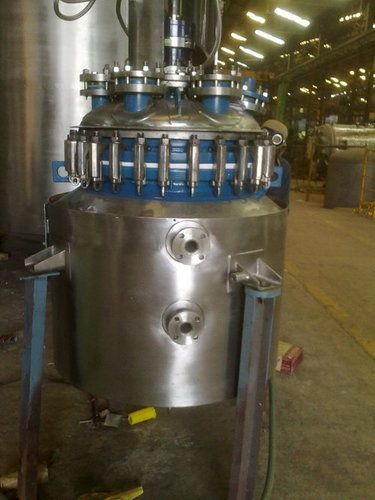
Stainless Steel Cladding
5000 INR/Piece
Product Details:
- Coating Type Stainless Steel Cladding
- Thermal Conductivity 15 W/mK Watt/Meter/K (w/(m.k)
- Layer Single-layer cladding
- Feature Corrosion resistance durability thermal efficiency
- Size Customizable based on industrial needs
- Surface Treatment Polished
- Density 8.0 Gram per cubic centimeter(g/cm3)
- Click to View more
X
Stainless Steel Cladding Price And Quantity
- 1 Piece
- 5000 INR/Piece
Stainless Steel Cladding Product Specifications
- Up to 800C (depending on grade)
- Industrial process equipment
- Metallic Silver
- Follow standard cladding installation procedures in industrial settings
- 500-750 MPa Megapascals (MPa )
- Cladding
- Polished
- 8.0 Gram per cubic centimeter(g/cm3)
- Variable thickness typically 1-10 mm Millimeter (mm)
- Corrosion resistance durability thermal efficiency
- Single-layer cladding
- Stainless Steel
- 15 W/mK (approximate for stainless steel) Watt/Meter/K (w/(m.k)
- Customizable based on industrial needs
- Stainless Steel Cladding
- 15 W/mK Watt/Meter/K (w/(m.k)
Product Description
Stainless Steel Cladding is offered with advanced strength. It is apt for the fabrication of vessels, structural units, storage tanks, bridges, process plants, hot water tanks, etc. The cladding has necessary resistance to corrosion, oxidation and abrasion. The said cladding is offered with advanced structural strength. In addition, the cladding has good thermal conductivity. It is offered with high durability, simple installment, usage versatility, eco-friendly nature. This is offered with improved insulation and less maintenance. The provided industrial cladding can also deal with destruction, caused by excess stress and mobility.
Adaptable Engineering for Diverse Industries
Our stainless steel cladding can be tailored to exact project specifications, accommodating a variety of industrial setups. Custom sizing and variable thickness make it especially effective for process equipment in sectors that demand efficiency, structural integrity, and robust protection against harsh operational conditions.
Built for Peak Performance and Longevity
With its high tensile strength and superior corrosion resistance, this cladding ensures prolonged service life, even under challenging environments. The polished surface treatment enhances appearance and eases maintenance, while the stainless steel layer offers thermal conductivity and stability, supporting applications exposed to high temperatures.
FAQ's of Stainless Steel Cladding:
Q: How is stainless steel cladding installed for industrial process equipment?
A: Installation should follow standard cladding procedures applicable to industrial environments, ensuring secure attachment and optimal surface coverage. It is recommended that installation be undertaken by trained professionals to maximize durability and performance.Q: What makes stainless steel cladding an ideal choice for industrial applications?
A: Its high tensile strength (500-750 MPa), corrosion resistance, and ability to withstand temperatures up to 800C make it extremely reliable for protecting process equipment, prolonging operational life, and maintaining process integrity in rigorous conditions.Q: When should I consider using single-layer stainless steel cladding over alternatives?
A: Single-layer stainless steel cladding is most suitable when there is a need for a balance of strength, corrosion resistance, and thermal efficiency in industrial environments, particularly where customizable thickness and size are crucial.Q: Where can I source this stainless steel cladding in India?
A: You can obtain this cladding through authorized manufacturers, fabricators, suppliers, and service providers across India, who offer tailored solutions and installation support for various industrial requirements.Q: What is the standard process for manufacturing and supplying stainless steel cladding?
A: Manufacturing typically involves selecting grade-appropriate stainless steel, followed by precision forming to the required thickness and size, surface polishing, and quality assurance, ensuring consistency in performance and appearance before supply.Q: How does stainless steel cladding enhance the thermal efficiency of equipment?
A: With a thermal conductivity of approximately 15 W/(mK), stainless steel cladding provides effective heat transfer and distribution, making it valuable for process equipment exposed to fluctuating temperatures.Q: What are the main benefits of choosing polished stainless steel cladding for my facility?
A: The primary benefits include improved durability, minimal maintenance due to the polished surface, excellent protection from corrosion, and compatibility with various process environments due to its mechanical and thermal properties.Tell us about your requirement

Price:
Quantity
Select Unit
- 50
- 100
- 200
- 250
- 500
- 1000+
Additional detail
Mobile number
Email

Other Products in 'GMP Model For Pharmaceutical Company' category


Contact Details
GST : 24AAECK1182C2Z0

- Plot No. 193-A, G.I.D.C. Estate, Near Telephone Exchange, Nandesari,Vadodara - 391340, Gujarat, India
- Phone :07313726608
-
 Send Inquiry
 Send Inquiry
- Mr Sandip Patel (Director)
- Mobile :07313726608
 Send Inquiry
 Send SMS
 Call Me Free
|


KRISHNA INSULATIONS & ENGINEERS PVT LTD
All Rights Reserved.(Terms of Use)
Developed and Managed by Infocom Network Private Limited.
Developed and Managed by Infocom Network Private Limited.

