



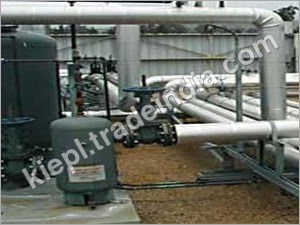
Polyisocyanurate Rigid Foam Insulation
750 INR/Piece
Product Details:
- Density 45 Gram per cubic centimeter(g/cm3)
- Coating Type Aluminum foil facing / Glass tissue / Kraft paper
- Layer Single or multi-layer as specified
- Thermal Conductivity 0.023-0.028 W/mK
- Surface Treatment Faced with foil or kraft paper as required
- Installation Guideline Boards to be laid tightly, joints sealed; mechanical or adhesive fixing per application
- Size Customized sizes available
- Click to View more
X
Polyisocyanurate Rigid Foam Insulation Price And Quantity
- 10 Piece
- 750 INR/Piece
- 2% change (70C, 90% RH)
- Excellent
- 2.5-4 kg/m2 (depending on thickness)
- Class B-s1, d0 (EN 13501-1)
- <2% by volume
- Low
- CFC/HCFC free blowing agent
- >90%
- 120 kPa at 10% compression
- Moderate
- Generally exceeds 30 years
Polyisocyanurate Rigid Foam Insulation Product Specifications
- Boards to be laid tightly, joints sealed; mechanical or adhesive fixing per application
- High thermal resistance, lightweight, moisture-resistant, dimensionally stable
- Customized sizes available
- 600 mm to 1200 mm
- 0.023-0.028 W/mK
- -200C to +140C
- Rigid Foam Insulation Board
- 0.023-0.028 W/mK
- Faced with foil or kraft paper as required
- Aluminum foil facing / Glass tissue / Kraft paper
- 150-250 kPa
- Polyisocyanurate (PIR) Rigid Foam
- Yellow / Light Brown
- Thermal insulation in roofing, wall and floor systems
- Single or multi-layer as specified
- 45 Gram per cubic centimeter(g/cm3)
- 25 mm to 100 mm
- 2% change (70C, 90% RH)
- Excellent
- 2.5-4 kg/m2 (depending on thickness)
- Class B-s1, d0 (EN 13501-1)
- <2% by volume
- Low
- CFC/HCFC free blowing agent
- >90%
- 120 kPa at 10% compression
- Moderate
- Generally exceeds 30 years
Product Description
Leveraging on our vast industry experience, we have emerged as a notable manufacturer, exporter and supplier of Polyisocyanurate Rigid Foam Insulation. This insulation is manufactured utilizing finest grade raw material under stringent supervision of our team of experts as per the set industry standards and ensures excellent results. Offered insulation is used as rigid thermal insulation for heating, ventilation and air conditioning systems. Besides, this Polyisocyanurate Rigid Foam Insulation can be availed from us at competitive prices.
Features:
-
Resistant to fire
-
Excellent insulation properties
-
High strength
-
Precise engineering
Superior Thermal Protection
Thanks to a thermal conductivity of 0.023-0.028 W/mK, Polyisocyanurate Rigid Foam Insulation delivers remarkable energy efficiency. Its closed cell structure significantly reduces heat transfer, making it an ideal choice for both new constructions and retrofit projects where thermal regulation is paramount.
Exceptional Durability and Moisture Resistance
Engineered to withstand harsh environments, this insulation maintains dimensional stability even at high temperatures (up to 140C) and humidity (90% RH). The boards resist water absorption and retain their insulative properties, ensuring long-term protection and minimal maintenance.
Versatile Applications with Customizable Options
Available in various widths (600-1200 mm), thicknesses (25-100 mm), and facings such as aluminum foil or kraft paper, these boards can be tailored to specific project needs. The ease of installation, combined with compatibility for single or multiple layers, makes them suitable for diverse building envelopes.
FAQ's of Polyisocyanurate Rigid Foam Insulation:
Q: How is Polyisocyanurate Rigid Foam Insulation installed for roofing and wall systems?
A: Boards should be laid tightly together with all joints sealed for maximum efficiency. Depending on application requirements, insulation can be mechanically fixed or adhered with suitable adhesives. Facings like aluminum foil or kraft paper enhance durability and performance.Q: What are the key benefits of using Polyisocyanurate Rigid Foam Insulation compared to other materials?
A: It provides high thermal resistance, excellent moisture resistance, low water absorption, and superior compressive strength. The material is lightweight, dimensionally stable, environmentally considerate (CFC/HCFC free), and offers a service life exceeding 30 years.Q: Where can Polyisocyanurate insulation be applied effectively?
A: It is suitable for thermal insulation in roofing, external and internal wall cladding, and floor systems across residential, commercial, and industrial buildings. Its dimensional stability and moisture resistance make it ideal for environments exposed to variable temperatures and humidity.Q: What is the process for customizing the size and facing of these insulation boards?
A: Customers can specify the required width, thickness, and surface treatment (aluminum foil, glass tissue, or kraft paper). Fabricators and suppliers in India offer tailored solutions based on project specifications and insulation performance goals.Q: When should Polyisocyanurate insulation be selected for a construction project?
A: It is recommended when high thermal efficiency, fire safety (Class B-s1, d0), and long-term durability are essential. Projects demanding lightweight, moisture-resistant, and environmentally friendly materials benefit most from this solution.Q: What is the environmental impact of PIR insulation?
A: Polyisocyanurate insulation is manufactured with blowing agents free from CFCs and HCFCs, ensuring reduced ozone depletion and a lower environmental footprint compared to traditional insulating products.Q: How does Polyisocyanurate insulation contribute to fire safety and sound insulation?
A: With a low flame spread index and fire classification of B-s1, d0 (EN 13501-1), it enhances building fire safety. While its core function is thermal protection, it also provides moderate sound insulation, contributing to overall comfort.Tell us about your requirement

Price:
Quantity
Select Unit
- 50
- 100
- 200
- 250
- 500
- 1000+
Additional detail
Mobile number
Email


Contact Details
GST : 24AAECK1182C2Z0

- Plot No. 193-A, G.I.D.C. Estate, Near Telephone Exchange, Nandesari,Vadodara - 391340, Gujarat, India
- Phone :07313726608
-
 Send Inquiry
 Send Inquiry
- Mr Sandip Patel (Director)
- Mobile :07313726608
 Send Inquiry
 Send SMS
 Call Me Free
|


KRISHNA INSULATIONS & ENGINEERS PVT LTD
All Rights Reserved.(Terms of Use)
Developed and Managed by Infocom Network Private Limited.
Developed and Managed by Infocom Network Private Limited.

