



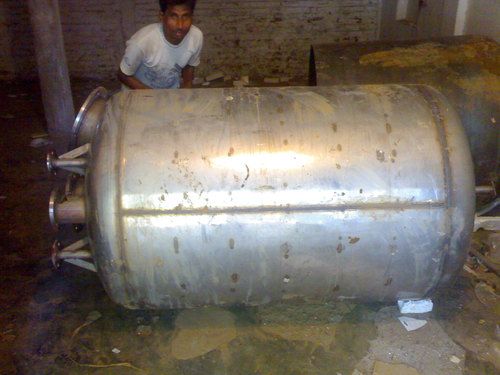
Tank Insulation
1200 INR/Piece
Product Details:
- Surface Treatment Aluminum/SS cladding or plain
- Size Custom (Modular/Segmented panels available)
- Layer Single/Double layer as per requirement
- Coating Type Aluminum/Steel cladding or Polyurethane coating
- Density 2 Gram per cubic centimeter(g/cm3)
- Feature Fire retardant, Moisture resistant, High thermal efficiency
- Installation Guideline Panels are installed with lock-in joints and secured with steel bands. Ensure proper sealing at joints for maximum efficiency.
- Click to View more
X
Tank Insulation Price And Quantity
- 1200 INR/Piece
- 1 Piece
- < 2% by volume
- CFC & HCFC free, environmentally friendly
- < 3 ng/(Pasm)
- Available for vertical, horizontal, and complex tank geometries
- 25+ years under normal operation
- ISO 3582/ASTM E84 Class 1
- 150 kPa at 10% deformation
- Complies with IS 12436/ASTM C1029
Tank Insulation Product Specifications
- Tank Insulation Panel
- Fire retardant, Moisture resistant, High thermal efficiency
- Yellow / Off White
- 0.022 0.024 W/mK Watt/Meter/K (w/(m.k)
- -200C to +110C
- 2 Gram per cubic centimeter(g/cm3)
- Aluminum/Steel cladding or Polyurethane coating
- Custom as per tank size Millimeter (mm)
- Panels are installed with lock-in joints and secured with steel bands. Ensure proper sealing at joints for maximum efficiency.
- 25 mm to 150 mm Millimeter (mm)
- 0.022 0.024 W/mK Watt/Meter/K (w/(m.k)
- Aluminum/SS cladding or plain
- Single/Double layer as per requirement
- Polyurethane Foam (PUF)
- Thermal insulation for industrial and residential storage tanks
- 0.2-0.3 N/mm Newtons per Millimetre Squared (N/mm2)
- Custom (Modular/Segmented panels available)
- < 2% by volume
- CFC & HCFC free, environmentally friendly
- < 3 ng/(Pasm)
- Available for vertical, horizontal, and complex tank geometries
- 25+ years under normal operation
- ISO 3582/ASTM E84 Class 1
- 150 kPa at 10% deformation
- Complies with IS 12436/ASTM C1029
Product Description
Tank insulation serves as a crucial solution in various industries where temperature regulation is paramount. Employed in storage tanks for liquids or gases, it effectively minimizes heat transfer, preventing energy loss and maintaining optimal product conditions. Featuring materials like foam or reflective barriers, tank insulation ensures thermal stability. Advantages include energy cost savings, reduced environmental impact, and prevention of substance degradation. The insulations ability to control temperature fluctuations enhances product quality and prolongs equipment life. Industries adopting tank insulation benefit from improved operational efficiency, compliance with environmental standards, and significant savings in energy consumption, solidifying its role in sustainable and cost-effective industrial processes.
Superior Thermal and Environmental Performance
Engineered to minimize thermal losses, these polyurethane foam insulation panels guarantee high thermal conductivity (0.0220.024 W/mK), ensuring efficient energy savings. Their closed cell structure, exceeding 90%, maintains low water absorption and vapour permeability, making them ideal for challenging conditions. The composition is environmentally safe, free from ozone-depleting CFCs and HCFCs.
Versatile Application for Custom Tank Shapes
Whether your tanks are vertical, horizontal, or uniquely shaped, the insulation panels can be manufactured in custom sizes and modular segments. This flexibility means engineers and fabricators can specify panels for flat or curved surfaces, supporting a wide range of industrial and residential storage purposes.
Robust Construction and Long-Term Reliability
Certified to IS 12436 and ASTM C1029, these panels exhibit outstanding compressive and tensile strengths. The durable construction ensures fire resistance (ISO 3582/ASTM E84 Class 1), moisture resistance, and stability at operating temperatures from -200C to +110C. With service life exceeding 25 years, users benefit from dependable tank protection.
FAQs of Tank Insulation:
Q: How is the tank insulation installed to ensure maximum thermal performance?
A: Tank insulation panels are easily mounted using lock-in joints, secured with steel bands for stability. For optimal efficiency, it is crucial to ensure proper sealing at all panel joints, which minimizes thermal bridging and air leakage.Q: What benefits does polyurethane foam insulation provide for storage tanks?
A: Polyurethane foam offers high thermal efficiency by minimizing heat loss, excellent fire retardancy, moisture resistance, and durability under a wide temperature range. It is also environmentally friendly and custom-made to fit diverse tank geometries.Q: Where can this insulation be used, and what types of tanks does it suit?
A: This insulation is suitable for industrial and residential storage tanks, including those that are flat, curved, vertical, horizontal, or of complex shapes. Customization options allow precise adaptation to tank size and form.Q: When should tank insulation panels be replaced?
A: Under normal operating conditions, these panels will perform efficiently for over 25 years. Replacement may only be considered if there is visible damage, substantial wear, or compromised insulation effectiveness.Q: What process is involved in customizing insulation panels for complex tank shapes?
A: The manufacturer fabricates modular or segmented panels to fit tank specifications. Engineers provide tank dimensions, after which panels are produced in appropriate thicknesses (25150 mm) and sizes, with optional surface treatments and coatings.Q: What fire safety standards does the insulation meet?
A: The insulation complies with ISO 3582 and ASTM E84 Class 1 fire resistance classifications, ensuring it meets stringent safety criteria for industrial environments.Q: How does the insulation contribute to sustainability?
A: The polyurethane foam panels are completely free from ozone-depleting CFCs and HCFCs. Their robust performance enables extended service life, reducing material wastage and insulation replacement frequency.Tell us about your requirement

Price:
Quantity
Select Unit
- 50
- 100
- 200
- 250
- 500
- 1000+
Additional detail
Mobile number
Email

Other Products in 'Tank Insulation' category


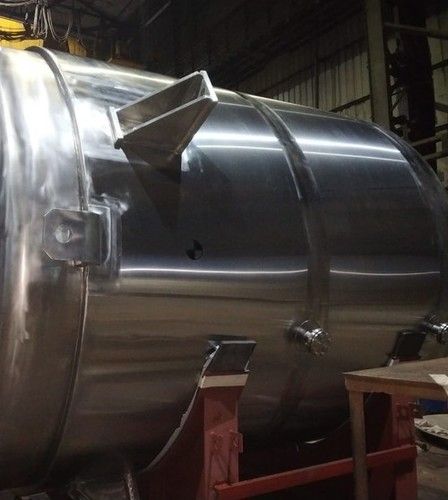

Contact Details
GST : 24AAECK1182C2Z0

- Plot No. 193-A, G.I.D.C. Estate, Near Telephone Exchange, Nandesari,Vadodara - 391340, Gujarat, India
- Phone :07313726608
-
 Send Inquiry
 Send Inquiry
- Mr Sandip Patel (Director)
- Mobile :07313726608
 Send Inquiry
 Send SMS
|


KRISHNA INSULATIONS & ENGINEERS PVT LTD
All Rights Reserved.(Terms of Use)
Developed and Managed by Infocom Network Private Limited.
Developed and Managed by Infocom Network Private Limited.

